
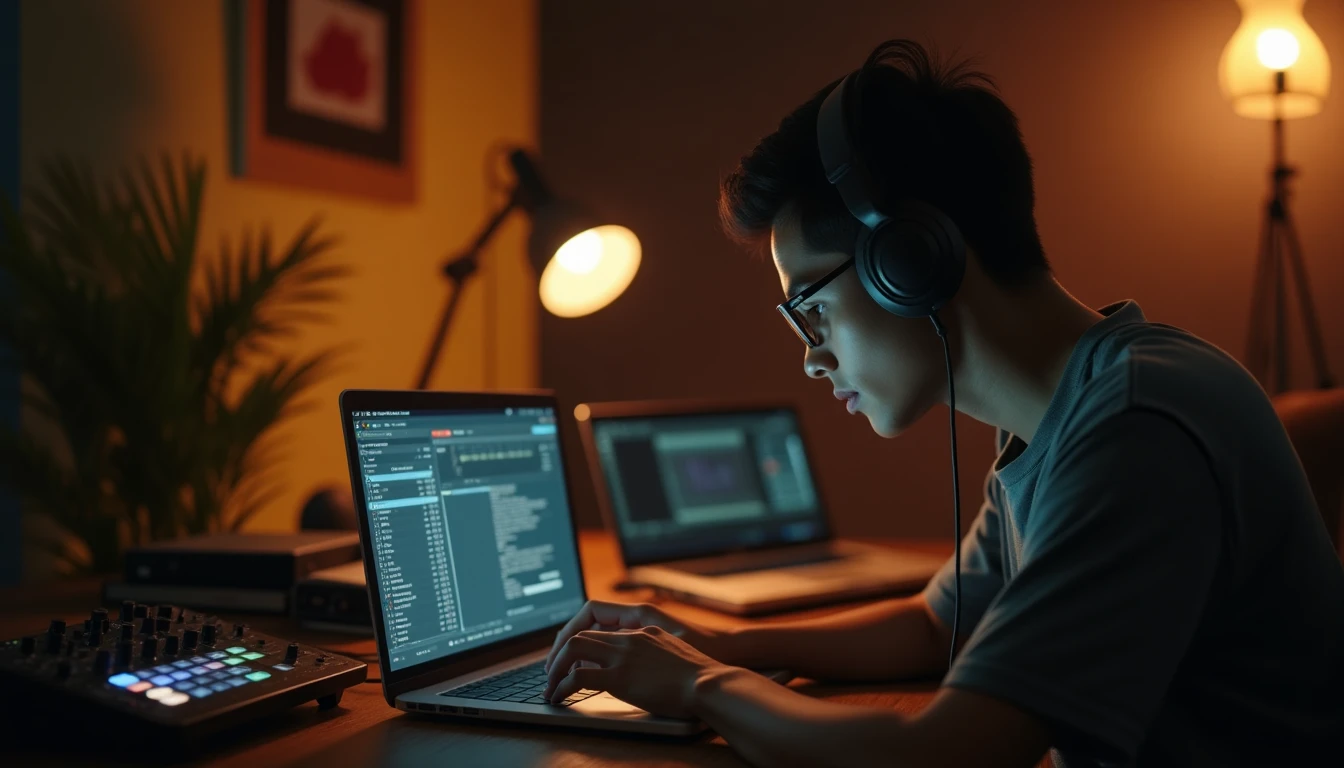
Last month, one of our clients, an F&B startup in Semarang, nearly panicked. Their latest promo video for social media suddenly got hit with a strike for using a popular song. And they had only used a short snippet. It was an important reminder: music in a video isn’t just a finishing touch; it can become a serious problem if you’re not careful.
Many creators, including me back in the day, tend to take music lightly. We like using whatever song is trending because it seems to fit the mood of the video best. But popular music is protected by copyright, and its use is tightly regulated. Without clear permission, your video can get a warning or even be taken down permanently. And this isn’t only about videos on YouTube; it applies to other social media platforms too, and even to a company’s internal presentation materials.
Why Is Popular Music a Problem?
The music you hear on the radio or on streaming services is a copyrighted work. There’s a songwriter, a record label, a publisher. Each of them holds rights to that work. If you use their song without the proper license, that’s copyright infringement, plain and simple. Getting a license for popular music, especially for commercial use, is usually complicated and expensive. There are rarely easy options for independent creators or small businesses.
Safe Music Options for Your Video
There are a few routes you can take so your video still has a great soundtrack without worrying about copyright problems. Each has its own pros and cons, depending on your needs and budget.
- Royalty-Free Music
This is the most popular option. Royalty-free music doesn’t mean free forever. It means you pay once up front for a usage license, and after that you’re free to use it without paying additional royalties every time the video is watched or used. But this ‘royalty-free’ comes with conditions.
When looking for royalty-free music, pay attention to the license details. Some music might be free for non-commercial use but require payment for commercial use. Some also require you to credit the music’s creator (attribution) in the video description or at the end of the video. Make sure you read the Terms of Service (ToS) or the license carefully. Sites like Epidemic Sound, Artlist, or even Envato Elements offer large royalty-free music libraries with a range of licensing models.
- Subscription Music Libraries
This is similar to royalty-free, but works as a monthly or yearly subscription. You pay a recurring fee to access their entire music library. The upside is that you get unlimited access to thousands of tracks and sound effects for as long as your subscription is active. It’s a great fit for regular video production or for agencies that need a lot of musical variety.
This subscription model usually comes with a fairly broad license, covering use across various digital platforms (YouTube, Instagram, Facebook, websites) and even some commercial use. Examples are Epidemic Sound and Artlist, which I mentioned earlier. They keep updating their catalogs, so you always have new music to choose from.
- Music Libraries from Editing Platforms
Many video editing programs and platforms now come with access to a built-in music library. For example, Adobe Premiere Pro has Adobe Stock Audio, and Final Cut Pro also has access to Motion Array. Platforms like Canva also have a music collection you can use directly in your video designs.
The main advantage of this option is easy access. The music is already integrated into your editing workflow. You don’t have to bother finding and downloading separate files. Still, double-check the license. Sometimes music from these libraries can only be used inside the editing platform itself, or the license is limited to projects made on that platform. Make sure the license lets you export the video and use it elsewhere, especially for commercial purposes.
- Commissioning Original Music
This is the most exclusive option and often the safest in terms of licensing, but also the most expensive. You can hire a composer or musician to create music specifically for your video. The result is a unique soundtrack that won’t sound like any other video, and you can set up the license to fit your needs.
The process usually starts with an in-depth briefing for the composer on the feel, tempo, instruments, and mood you want. After that, the composer creates a draft, then revisions, until it’s finally done. At Labstory, we’ve helped clients create original music for their company profile videos. The results were very satisfying because the music reflected their brand identity. Of course, it’s the most expensive of all the options, starting from several million rupiah depending on the complexity and the musician’s reputation.
Free vs Royalty-Free vs Licensed
These three terms often get mixed up, even though they mean different things:
- Free: no cost. But in the music world, ‘free’ rarely comes without conditions. Music that’s advertised as free usually has a very limited license, perhaps only for personal use, and can’t be distributed or used commercially. One example is music you find on sites dedicated to Creative Commons Zero (CC0) licensing, which waives all copyright.
- Royalty-Free: As explained earlier, this means you pay once for a license and are free to use it without paying recurring royalties. But there are still license terms you have to follow. It doesn’t mean you’re free to use it for ALL purposes without limits.
- Licensed: This is the most general term. It means you need to get permission (a license) to use the work. The license can be paid or free, and it has a specific scope of use. A music license for a cinema film is obviously different from a music license for a TikTok video.
What You Must Check Before Using Any Music
Whatever the source of the music, there are a few crucial points you MUST check:
- Commercial Use Coverage: Does the license allow you to use this music in a video meant to sell products/services, promote a business, or on a monetized platform (for example, YouTube with ads)? This is the most common trap.
- Attribution Requirements: Do you have to list the music creator’s name, the song title, and its source in the video description? If so, make sure you do it correctly to avoid a violation.
- Platform Coverage: Does the license apply to every platform you’ll be using? Some licenses are only for YouTube, some for websites, some for social media, and some are even limited to use within a single country. Check for any geographic or platform restrictions.
- License Duration: Is the license valid forever (perpetual) or only while you’re subscribed? If you cancel your subscription, can you still use music that’s already in your older videos?
Keep Proof of Your License
This is a crucial step that often gets forgotten. Once you’ve obtained a music license (whether through a purchase, a subscription, or a download), keep the proof safe. It’s usually a PDF file, a confirmation email, or a screenshot of the license page. Store it in a secure, well-organized folder. If a copyright claim ever comes in, this proof of license is what will save you. At Labstory, we always keep proof of license for every audiovisual asset we use in client projects.
Pick the one route that best fits your working rhythm: a subscription if you produce regularly, a one-time royalty-free purchase if it’s only occasional, original music if the brand truly calls for it. Whatever you choose, the one small habit that saves you is keeping the proof of license. When a copyright claim arrives months later, that single PDF file is the difference between a five-minute fix and a video that’s already been taken down.
Need a visual production team for a project in Semarang? Labstory is a Semarang-based production house. See Labstory’s portfolio for examples of our work, or get to know our team and approach.
FAQ
What’s the difference between ‘free’ and ‘royalty-free’ music?
‘Free’ music costs nothing and usually comes with very strict usage limits (for example, personal use only). ‘Royalty-free’, on the other hand, means you pay once for a license and can use it many times without paying additional royalties, but you still have to follow the license terms (for example, attribution).
How do I keep my video from getting a copyright claim?
Use music with a clear license. Safe choices are royalty-free music, subscription music libraries, libraries from editing platforms, or commissioning original music. Avoid using popular songs without permission.
Can I use music from the YouTube Audio Library?
Yes, the YouTube Audio Library offers music you can use for free, but still pay attention to the license details. Some tracks may require attribution, so always read the instructions provided.
Where can I find copyright-free music?
Some popular sources include Epidemic Sound, Artlist, Envato Elements, Pixabay Music, and the YouTube Audio Library. Always make sure to check the specific license of each track you choose.
What should I do if my video has already received a copyright claim?
If you have valid proof of license, file a dispute with the video platform (for example, YouTube) and include that proof. If you used the music without permission, you may need to remove the music, replace it, or delete the video.
Leave a Reply