
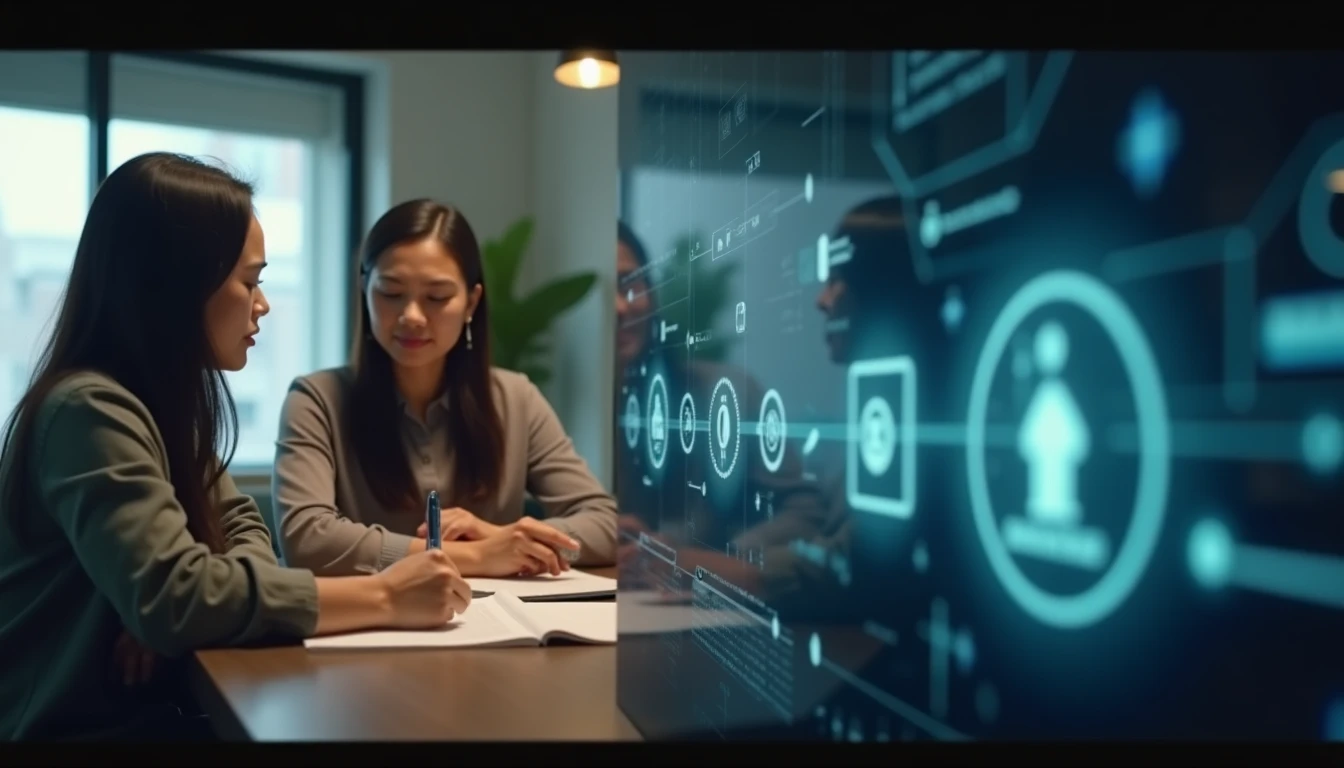
Last month, a client asked whether, after paying for a company profile video, they could immediately use it for ads on every platform without limits. This question comes up a lot, and honestly, it’s a gray area that often gets overlooked. Yet understanding video usage rights and licensing is crucial so you don’t make a wrong move later on.
At Labstory, we always encourage clients to discuss this from the start. Many don’t realize there’s a fundamental difference between copyright and usage rights. This isn’t about making things complicated; it’s about clarity and avoiding misunderstandings that could hurt both sides.
Copyright vs Usage Rights: Which One Do You Have?
Let’s start with the terms. Copyright is the moral and economic right attached to the creator of a work, in this case a video. By default, the copyright of a video belongs to the production team that made it, including us at Labstory. That means we have the right to decide how the video may or may not be used by others.
Usage rights, or a license, on the other hand, are the permission we give you as the client to use the video. That permission has limits. Think of it like buying a house: you have full rights to use everything inside it, but that doesn’t automatically give you the right to change the building’s structure or resell it without the original owner’s permission.
These limits on usage rights are what need to be spelled out. What’s included? Everything from the kinds of media it can be used on (organic social media only, paid ads, the company website), to how long it can be used (one year, five years, or forever), to where it can be used (only in Indonesia, Southeast Asia, or globally).
Recently we finished an event documentation video project at Hotel Tentrem Semarang. The client asked for permission to use clips of the video on their educational YouTube channel. We granted it, with the conditions that each clip be no longer than 5 minutes and that none be used in paid ads. It’s an example of how usage rights can be negotiated to fit the client’s needs and our capacity as creators.
Music and Footage Licenses: Don’t Get Hit with a Claim
Another thing that often gets overlooked is licenses for music and additional footage (stock footage). Many clients assume every element in the video is already free to use. But the music you hear in the video, or a short video clip slipped in, has a license too.
If we used commercial music without an official license, or footage from a paid library without paying the license for the client, your video would be at risk of a copyright claim. That can end with the video being removed from the platform, or even legal action.
At Labstory, we always make sure all the music and stock footage we use in client video productions has the appropriate license. If you have a specific music or clip reference, we’ll help check its license. If it turns out to be paid, we’ll let you know the license fee up front as a separate item from the production cost.
Raw Files (Raw Footage): Usually Not Included
Clients often ask for the raw files (raw footage) from a shoot. It helps to understand that raw files are our base material for editing. Their quality may not be ready for direct viewing, and the files are very large.
By default, raw files aren’t included in the production package. Why? Because we need to manage storage and data backups. Raw files also contain technical information that may not be relevant to the client. But if you really need raw footage for archiving or follow-up projects, we can talk about it.
We can provide it for an extra fee to cover archiving, data transfer, and storage. This process usually takes additional time and resources, so it needs to be communicated up front and included in the contract.
Why Does All of This Have to Be in the Contract?
Why do all these details need to be written clearly into the video production contract? The reason is simple: to protect you and us. A contract is a legal umbrella that binds both parties, making sure there’s no doubt or differing interpretation later on.
With clear clauses on copyright, usage rights, license duration, media coverage, and things like music licenses and the availability of raw footage, you have something in writing to rely on. It minimizes the potential for disputes and makes sure the video you’ve invested in can be used to the fullest for your business goals.
When we worked on a video for an F&B startup client in the Gajah area of Semarang, we drew up a very detailed contract. In it, we explained that the video usage rights were non-exclusive and valid for organic social media and the website landing page for 3 years. If the client wanted to use it for paid ads, an additional license fee would need to be paid for a different period. This gave the client complete clarity about how their video could be used.
Copyright, usage rights, music licenses, raw footage — the four things that most often go undiscussed precisely because they sound technical and not urgent. Yet they only become an issue once the video gets a claim, or when you want to use it for ads and find out the license doesn’t cover that. Ask for all of it in writing in the contract before production starts; that’s far cheaper than sorting it out after the video is live.
Need a visual production team for a project in Semarang? Labstory is a Semarang-based production house. See Labstory’s portfolio for examples of our work, or get to know our team and approach.
FAQ
Once I’ve paid for a video, am I free to use it anywhere?
Not always. The payment covers the production cost and usage rights according to the agreed license. The copyright of the video generally stays with the creator, unless a transfer of rights is agreed in writing in the contract.
What’s the difference between video copyright and usage rights?
Copyright is the moral and economic right held by the video’s creator. Usage rights, or a license, are the permission given to the client to use the video within certain limits (for example, duration, platform, and region).
Are raw files (raw footage) automatically included in the production package?
Usually not. Raw files are the base material of the production and aren’t always included in the standard package. If you need them, this can be discussed, and there’s usually an extra fee for archiving and data transfer.
What if the video uses licensed music?
A good production team will make sure all the music and other elements in the video have valid licenses. Otherwise, the video can get a copyright claim. Make sure this is covered in the contract.
Why do usage rights details need to be in the contract?
A clear contract protects both parties from misunderstandings. It makes sure you know exactly how the video can be used, and that the creator’s rights are protected.


Leave a Reply