
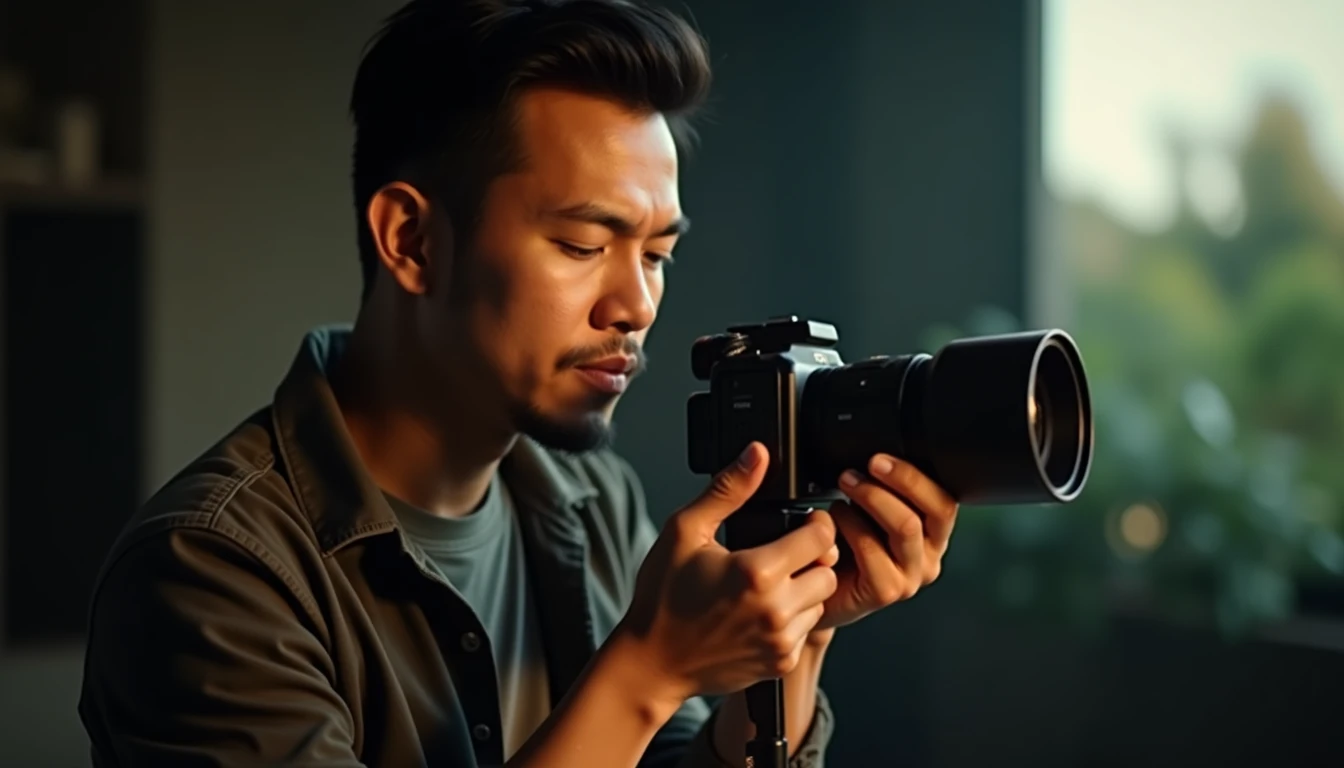
Last month, I was chatting with a photographer friend who’s just starting a small studio in Semarang. He told me, "It’s so hard to set prices for photo work, Mas (a friendly Javanese way to address a man). Every client haggles differently, and sometimes it’s confusing." I know that feeling well. Setting your price is crucial, not just for profit, but so you get paid what your work is worth.
This article covers how to work out commercial photography rates in 2026, from one practitioner to another. The goal is to keep you from being easily talked down and to help you run your business with more peace of mind.
Why a Rate Card Really Matters
A rate card, or a list of base prices, isn’t meant to be rigid; it’s a guide. Without one, you’ll waver easily when someone haggles. Clients who understand market prices will respect your professionalism, while those who are just looking for the cheapest option will keep bargaining no matter what. With a rate card, you have a solid basis for negotiation. It also matters internally if you run a small production house, so everyone on the team understands how prices are calculated.
The main benefit of having a rate card is consistency. You don’t have to rethink your price from scratch every time a new client comes along. That saves time and energy. A clear rate card also builds client trust. They can see you’re serious and professional, not just trying things out.
The Main Components of Commercial Photography Pricing
Setting a price is like putting together a puzzle. There are lots of pieces you have to fit together to complete the picture. Here are the main ones:
- Shoot Time: This is the most common starting point. It’s usually split into:
- Half Day (4 hours): Good for small projects or ones with a limited location.
- Full Day (8 hours): For bigger projects, ones that need location changes, or lots of setups.
- Hourly (beyond a full day): For projects with an uncertain duration.
This time covers you and your team (if any) on standby at the location, setting up gear, and packing up.
- Project Complexity: This is about how complicated the client’s request is.
- Simple Product Photos: A single object on a white or minimalist background. The lighting setup is relatively easy.
- Styled Photography/Still Life: Requires arranging objects and props and choosing backgrounds in detail. It often needs visual research and a moodboard.
- Corporate/People Photos: Involves human subjects and requires interaction, posing, and the right lighting to bring out their character.
- Events: Capturing dynamic moments requires the skill to adapt quickly to changing situations and lighting.
The more complex it is, the more likely it’ll take extra time and effort.
- Number of Final Photos: How many final photos will you deliver to the client? This has to be clear from the start.
- Is it priced per edited photo?
- Or per photo package (for example, 10 final photos)?
Make sure you don’t only count your time on location, but also the time it takes to select (cull) and edit those photos.
- Image Usage Rights / Licensing: This is crucial and often forgotten. Clients aren’t only paying for the photos, but also for the right to use them.
- Internal License: For use within the company (for example, internal presentations or an internal website).
- Limited Commercial License: For specific media (for example, social media ads only, for 6 months).
- Broad Commercial License: For multiple media (print, digital, TV ads, billboards) with no time or territory limits. This is the most expensive.
Spell out the usage rights the client gets in detail, so the photos aren’t misused later on.
- Editing & Retouching Costs: Editing can take as long as the shoot itself, or even longer. Factor in:
- Color Correction: Adjusting color, white balance, and exposure.
- Retouching: Removing spots, dust, and product flaws, and smoothing skin (for photos of people).
- Compositing: Combining several images (rare for simple product photos, but possible for more complex concepts).
How many hours do you allocate per final photo?
- Equipment & Studio Costs: These are operating costs you need to include.
- Equipment Rental: If you use gear you don’t own, the rental cost has to be included.
- Equipment Depreciation: Cameras, lenses, lights, and tripods have a limited lifespan. This cost needs to be factored in indirectly.
- Studio Costs: Studio rent, electricity, air conditioning, studio accessories.
If you have your own studio, still count its operating costs.
- Additional Costs: Other things like transportation, accommodation (for out-of-town jobs), crew meals, and location permits (if needed).
Rough Commercial Photography Rates for 2026
Pinning down an exact number is hard because every project is unique. But as a rough picture for 2026 in places like Semarang or other big cities, here are the estimates:
-
Product Photos (Simple, White/Minimalist Background, 10–20 Final Photos):
-
Half Day: From IDR 3,000,000 – IDR 7,000,000
-
Full Day: From IDR 5,000,000 – IDR 12,000,000
-
Note: This doesn’t include a broad commercial license. If the client needs a license for a national ad campaign, the price can go up 2–3x.
-
Corporate Photos (Company Profile, Employees, Office, 20–30 Final Photos):
-
Half Day: From IDR 5,000,000 – IDR 10,000,000
-
Full Day: From IDR 8,000,000 – IDR 18,000,000
-
Note: If it involves many people, complex shooting locations, or a special concept, the price can be higher. Commercial licensing is also a deciding factor.
Remember, these numbers are rough ranges. Projects with a high level of difficulty, heavy editing needs, or very broad usage licenses will push the price up significantly.
Factors That Can Raise Your Rates
Why can some photographers charge far higher rates? Here are a few factors:
- Experience & Portfolio: The more successful projects and the stronger your portfolio, the higher your value. Clients trust you to deliver consistent results.
- Niche Specialization: Being an expert in a particular field (for example, architecture, gourmet food, or high-end fashion) makes you more sought after and lets you charge premium prices.
- Speed & Efficiency: If you can finish projects faster than average without sacrificing quality, that’s added value clients will pay for.
- Broad Commercial Licenses: As discussed earlier, image usage rights are a commodity. A broader license means the images have a higher market value.
- Reputation & Testimonials: A good reputation and positive testimonials from past clients are valuable assets that can raise trust and your bargaining power.
Common Mistakes When Setting Prices
Many photographers, especially those just starting out, often make these mistakes:
- Pricing Too Low: This is a trap. You might get lots of clients, but with thin profits. Over time, you can burn out. On top of that, low prices can make your quality look lower.
- Forgetting to Count Editing Time: The shoot time often looks like the big part, but people forget that the hours in front of the screen editing take just as much work. Don’t end up slaving away without fair pay.
- Not Including Overhead: Equipment, studio, editing software, internet, electricity: these are all costs you have to cover. Don’t let your price only cover day-to-day operations.
- Ignoring Image Usage Rights: Giving a client an unlimited license at a standard price hurts you. Image usage rights have their own business value.
- Not Accounting for Tax: Remember, once your business grows, taxes are an obligation. Factor them in from the start so they don’t catch you off guard.
A rate card doesn’t guarantee nobody will haggle; there will always be people who do. But a rate card that’s calculated honestly, including the editing time and equipment depreciation that people so often forget, lets you know exactly at what number a project starts losing you money, and when 'no' is the right answer. Low prices do attract clients faster; unfortunately, they also attract the most difficult ones.
Need a visual production team for a project in Semarang? Labstory is a production house based in Semarang. See the Labstory portfolio for examples of our work, or get to know our team and our approach.
FAQ
What is the average rate for a product photographer in 2026?
For simple product photos on a minimalist background, rough rates in 2026 start from IDR 3 million for a half day (4 hours) and IDR 5 million for a full day (8 hours). These numbers can go up depending on complexity, the number of photos, and the image usage license.
What counts as 'project complexity' when calculating a price?
Project complexity covers how intricate the object styling is (styled photography), the need for visual research, the number of subjects being photographed (for example, many models or employees), and the technical demands of lighting and setup.
Why do image licenses matter when setting a price?
The image license determines the client’s rights to use the photos. The broader the usage rights (for example, for a national ad campaign across multiple media with no time limit), the higher the market value of the images, which justifies a higher photography fee.
What are the most common pricing mistakes new photographers make?
Common mistakes include pricing too low for fear of losing clients, forgetting to count editing time, which takes significant hours, not including operating costs (equipment, studio, tax), and ignoring the value of image usage licenses.



Leave a Reply