
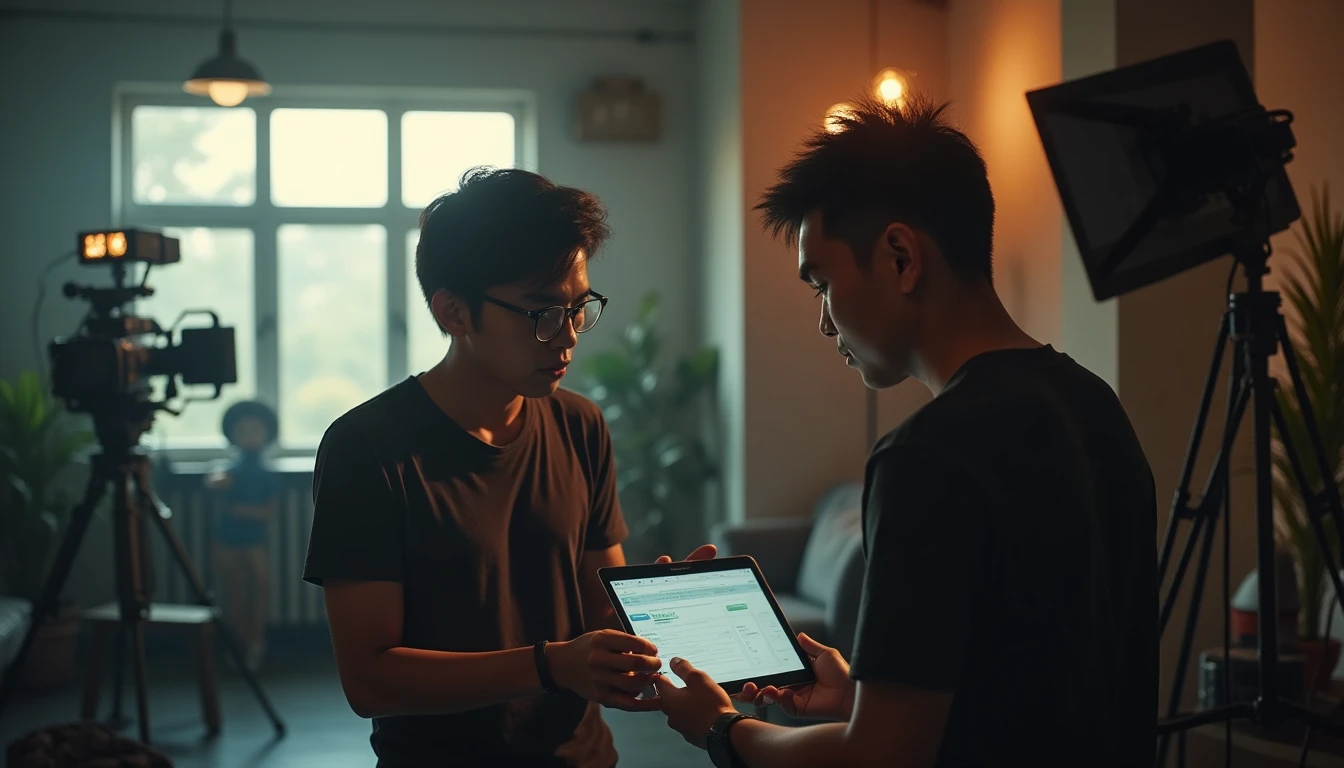
Last month, a prospective client came to me for a profile video. After our first discussion, they offered a price far below our standard rate and even pushed us to lower our rental rates for gear that’s crucial to our operations. It’s not the first time I or the team at Labstory have faced a situation like this. Clients who “want a lot” on a limited budget are a classic challenge in the creative industry, and in video production especially.
It forces us to rethink: how do you handle aggressive budget negotiations without sacrificing the quality of the final product, the upkeep of your gear, and the sustainability of your own business? This isn’t just about “selling a service.” It’s about building a shared understanding between vendor and client of what a professional video production is worth.
What Does a Video Production Ideally Cost?
Pinning down the ideal cost of a video production is complicated. There’s no single number that fits everyone. The cost depends heavily on the scale of the project, its complexity, the length of the shoot, crew needs, the gear used, and post-production. Take a simple example: a 3-minute company profile video. If the client only needs one shooting day at one indoor location in Semarang, say an office near Tugu Muda, with one camera and standard lighting, the cost will obviously be different from a video that needs three shooting days at several outdoor locations in Banyumanik, with two cameras, a drone, complex lighting, and talent.
At Labstory, we never throw out a number just to close a deal. Every quote is the result of careful calculation. We factor in operating costs: routine maintenance for our Lumix S5iix cameras, lenses, Aputure 600d lights, and stabilizers, plus editing software and music licensing. Ignoring maintenance costs is just asking for trouble later. Poorly maintained gear can break down mid-shoot, delay production, and end up hurting the reputation of both the client and the vendor. We once had a shoot delayed because a camera battery died on location, even though we’d looked after that battery well. Imagine if that had happened because we’d cut corners on maintenance.
I remember a commercial video project for an F&B startup brand in Semarang. At first they wanted a super tight budget. We explained that to capture the texture of the food in detail, with lighting that makes it look appetizing, we needed a special lighting setup and a macro lens. If we were forced to make do with whatever gear was at hand, the result wouldn’t look the way they imagined. In the end, we agreed on budget adjustments for a few items, and they were happy with a sharp, mouth-watering final result. It’s an example of how open communication about technical needs can change how a client sees the budget.
When the Client Asks for “More” on a “Limited” Budget
This is the most common dilemma. The client has a long wish list: drone shots in Kota Lama, slow-motion product details, interviews against an aesthetic backdrop, and an original orchestral score. But the budget on offer only covers one camera and one crew member in a simple studio. This is where transparency and education matter.
I always try to explain what can be achieved with the available budget, and what the consequences are of pushing for more than the budget allows. For example, if the client wants drone shots but the budget won’t stretch that far, I can offer other options: focus on product details with a sharp prime lens, or use a gimbal for smooth, cinematic camera movement. These are trade-offs the client needs to understand. You can’t get “everything” without compromise.
In one case, a client asked to add scenes outside the agreed schedule without adding to the budget. We explained that every extra hour of crew time and gear rental has a cost. If they still wanted the extra scenes, there were two options: increase the budget, or shorten other scenes that were already planned. We can’t just say yes without doing the math. It’s about protecting the integrity of the production process and our commitment to the schedule.
Lowering gear rental rates to meet a client’s very aggressive demands, like the wedding client asked us to, is a decision that needs careful weighing. If the reduction is small and we already have backup units of that gear, it might be worth considering. But if it cuts into the funds set aside for routine maintenance, or even makes us lose money, it’s not a wise move. We’d rather explain in detail why that gear carries a certain rental value and offer other alternatives that fit their budget, for example using slightly different gear that’s still high quality.
Keeping Production Quality Up Without Draining the Client’s Wallet
How do you make sure the client still gets a quality video without feeling “cheated” on price? The key is flexibility and offering creative solutions.
- Prioritize the Core Need: Ask what the essence of the video they need is. Is it for brand awareness, product education, or event documentation? Focus the budget on the elements that matter most for reaching that goal.
- Offer Tiered Packages: Put together several package options. For example, a basic package with one camera, a standard package with two cameras and a drone, and a premium package with more complex cinematography. This gives clients choices that fit their budget.
- Optimize the Shooting Schedule: Plan the shoot as efficiently as possible. If you’re shooting in one area like Kota Lama, get as many shots as you can at several spots in one go to save time and crew transport costs.
- Spell Out the Cost Components: Explain the broad cost components of the production: pre-production (concept, storyboard), production (shooting, crew, gear), and post-production (editing, color grading, sound design). This helps clients understand where the money goes.
- Use the Right Gear, Not Just Expensive Gear: Sometimes gear that’s “good enough” is all you need. We don’t always have to use the most expensive camera if the project doesn’t demand it. A Lumix S5iix or Lumix S1ii is more than capable for many projects. Focus on how that gear is used by an experienced team.
I once handled a client testimonial video project for a clinic in Semarang. Their budget was limited, but they wanted a professional result. We used one Sony A7III camera with a kit lens, plus one Aputure Amaran LED light to light the speaker’s face. We focused on audio quality with a Sennheiser MKE600 shotgun mic and clean editing. The client was very happy, because their message came across clearly and the visuals still looked good, even without ARRI-level gear.
When Should You Firmly Say No?
Sometimes a client’s request really is unrealistic or could damage our reputation. For example, if a client asks for a Hollywood-level result on the budget for a phone shoot on someone’s front porch. Or if they ask us to work below safety standards to save time.
In situations like these, being firm but polite is the best approach. Explain your limits and the risks that could come up. “I’m sorry, with the budget and time available, we can’t guarantee results on par with a large-scale production. We can offer a professional result that meets our standards, but if you need that level of quality, we may not be the right vendor for you.” Honest communication is better than empty promises that end in disappointment.
Clients who “haggle till dawn” rarely have a real problem with the number itself; what they’re looking for is assurance that their money won’t be wasted. Once the cost components are broken down openly and the trade-offs of each option are explained, the negotiation stops being a tug-of-war and becomes a matter of choosing a package. At that point, price is no longer about who wins.
Need a visual production team for a project in Semarang? Labstory is a production house based in Semarang. Browse the Labstory portfolio for examples of our work, or get to know our team and approach.
FAQ
How do you set a realistic budget for a video production?
A realistic budget depends on the project’s scale, complexity, shooting time, crew size, the gear needed, and post-production. Communicate your needs to the vendor in detail to get an accurate estimate.
What happens if I force a budget that’s too low?
Forcing a budget that’s too low can lead to a lower-quality final product, makeshift gear, production delays caused by poorly maintained equipment, or even a cancelled project. The vendor may be forced to sacrifice important elements to fit the budget.
How do you negotiate a budget without sacrificing quality?
Focus on your video’s main priorities. Offer creative solutions like tiered packages, optimize the shooting schedule, or use gear that’s right for the job rather than simply the most expensive. Being transparent about what your budget can achieve helps far more.
When should I turn down a client’s request?
Turn down requests that are unrealistic, could damage your reputation, or break workplace safety standards. Being firm but polite when explaining your limits and the risks will help keep the relationship professional.



Leave a Reply