

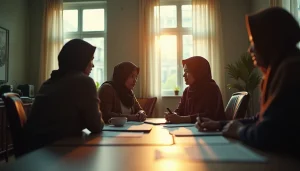
Last month, I got a call from a prospective wedding client. They were really excited about our portfolio, but the moment we got to price negotiation, the mood changed completely. They kept pushing the price down until I felt I would have to sacrifice our equipment maintenance budget. On top of that came a never-ending stream of requests. The experience got me thinking: how can we protect the value of video production work, especially in an industry as price-sensitive as weddings?
Why Do Wedding Clients Haggle So Hard?
There are a few reasons wedding clients tend to be more aggressive when negotiating price. First, a wedding is a once-in-a-lifetime event, and many couples want everything to be perfect without draining their savings. They may see video as an 'optional' item whose cost can be cut when the budget runs thin. Second, pricing information is very easy to find online. Clients can compare quotes from many vendors, which sometimes makes them feel they have more bargaining power. Sometimes they also do not fully understand what goes into a quality video production. They may only see the end result, not the process behind it: concept research, equipment prep, long shooting hours, lighting adjustments, editing that takes hours on end, all the way to rendering.
In Semarang, competition among wedding video vendors is also pretty tight. That can be a double-edged sword. On one hand, it pushes us to keep innovating. On the downside, it creates an unhealthy trend in pricing. I once handled a project in the Kota Lama area where the client asked for an extra-long shoot, from 8 a.m. to 10 p.m., with no extra charge for the crew's overtime. Their reasoning was, 'It's a special moment, everything has to be captured.' But crew fatigue can affect the quality of the final result. We had to explain that excessive working hours also add operating costs, including crew meals and the risk of equipment damage when it is used nonstop under the blazing sun.
Setting a Fair Price: More Than Just a Number
Pricing video production is not just multiplying working hours by a rate. There are many factors to account for. Operating costs are one of them. Equipment such as cameras (for example, a Lumix S5iix or Canon R5), lenses, drones (DJI Mavic 3), lighting (Aputure 600d), stabilizers (gimbals), and audio gear (Sennheiser MKE 600) needs regular maintenance. Servicing, replacing worn parts, and upgrading gear are real costs. If rates are squeezed too hard, the maintenance budget gets eaten up, the equipment deteriorates, and the risk of breakdowns during a shoot goes up. It is like a doctor who charges too little; they cannot buy new medical equipment or properly maintain what they already have.
On top of that, price also reflects the value of the team's expertise. We have spent years learning visual composition, storytelling techniques, audio, and detailed editing. That is not something you can learn overnight. Our team at Labstory has logged plenty of hours across many kinds of productions, from company profiles to events, including weddings. That experience is what lets us translate a client's vision into compelling visuals. We once covered an event at PRPP Jawa Tengah (the Central Java fairgrounds), where the weather was very unpredictable. Our team had to switch the setup from outdoor to indoor within minutes, without sacrificing image quality. That kind of quick adaptation comes from experience, not just from what the client 'wants'.
Here is a simple comparison between a 'too cheap' quote and a price that reflects production value:
| Aspect | 'Too Cheap' Quote | Price That Reflects Value |
|---|---|---|
| Shoot Duration | Limited, often doesn't match the key moments | Flexible, adjusted to the event's peak moments |
| Crew Size | Bare minimum (1–2 people) | Optimal (2–4 people for full coverage) |
| Equipment | Standard, possibly little extra lighting | High-end, including lighting, drone, professional audio |
| Editing Process | Quick, minimal color correction & sound mixing | Detailed, color grading, sound design, licensed music |
| Revisions | Limited (1x) | Flexible (2–3x) |
| Quality Guarantee | None | Yes, a commitment to fix any production defects |
Managing Client Expectations From the First Conversation
One of the best ways to avoid the 'negotiation trap' is open communication from the start. When a prospective client asks about price, don't give a number right away. First explain what they will get. Use your portfolio to show the difference in quality between packages. I always stress that our service is not just recording footage, but creating a visual story that will be remembered forever. Early in the conversation, I ask about details such as:
- What is the theme of your wedding?
- Which important guests need to be covered?
- Are there specific moments that must not be missed?
- What do you expect from the final result (for example: editing style, video length)?
By understanding what they need, we can offer the most suitable package, complete with a detailed explanation of what the price includes. If the client still wants to bargain, I explain the trade-offs. For example, 'If we cut the shoot down to 3 hours, the bride and groom's getting-ready moments most likely won't be fully covered. Or, if we only use one camera, we may lose the angle from the groom's family during the ijab kabul (the Islamic marriage vows).' This approach is more constructive than simply saying no.
Handling clients who 'want a lot' also takes a strategy. We use a system of briefs and written confirmations. Any new request outside the original scope gets its cost discussed again. For example, a client asks to add a shoot session at another location outside the main event area, such as Candi Gedong Songo. We explain that this needs extra travel time, transportation costs, and possibly adjustments to the crew's schedule. If they agree, we draw up a contract addendum with the new costs and scope of work. Flexibility matters, but it has to stay within limits that are healthy for both sides.
When Should You Have the Nerve to Say No?
Sometimes, even after you have explained everything at length, the client still insists on an unreasonable offer. This is where we need the nerve to say 'no'. Forcing yourself to take a project at a price that is too low only hurts you in the long run. The quality of the work can drop because of makeshift equipment or an exhausted crew. Your reputation can take a hit if the final result doesn't meet expectations, even though you gave it everything on a tiny budget. Better to lose one client than to damage your professional image.
I have been in that position. We were offered a job covering a big event at GOR Jatidiri (a sports arena in Semarang). The client wanted coverage from morning to night, with several camera positions at once, but the budget they offered was only enough for one camera and one crew member. After careful calculation, we decided to turn it down. We explained that reaching the quality they wanted would take at least two cameras and a bigger team. We suggested they look for another vendor that focuses on large-scale productions at that budget, or raise their budget so we could deliver our best work.
As it turned out, a few months later the client contacted us again. This time, they were willing to go with our standard rates after seeing the work of another vendor, which turned out to be disappointing.
That GOR Jatidiri client came back in the end, and it was no coincidence. A transparently explained price often loses in the first round, but wins once the client has something to compare it with. People who haggle hardest rarely walk away for good — they are taking measurements, and the vendor who had the nerve to explain the trade-offs is the one they look for when the cheap result turns out to be a letdown.
Need a visual production team for a project in Semarang? Labstory is a production house based in Semarang. See the Labstory portfolio for examples of our work, or get to know our team and our approach.
FAQ
How do I calculate a fair price for wedding video services?
Add up all operating costs (equipment, maintenance, transportation, crew meals), working time (shooting & editing), the team's expertise, and the company's overhead. Add a reasonable profit margin. Do your research on market prices, but do not make them your main benchmark.
What should I explain to a client during price negotiation?
Explain the scope of the service in detail (shoot duration, crew size, the type of equipment used, the editing process, number of revisions). Show your portfolio to illustrate the difference in quality between packages. Explain the trade-offs if the price goes down.
What if the client keeps haggling and their requests are unreasonable?
Stay calm and professional. Explain your limits again and what their requests would mean for quality. If the negotiation does not reach a healthy middle ground, it is better to politely decline and offer an alternative if possible (for example, a simpler package).
How long should editing a wedding video ideally take?
Editing time varies a lot depending on the complexity and length of the video. A wedding highlight video usually takes 20–60 hours of editing work, not counting color grading, sound mixing, and rendering. That can mean anywhere from a few days to a few weeks after the event.

Leave a Reply