
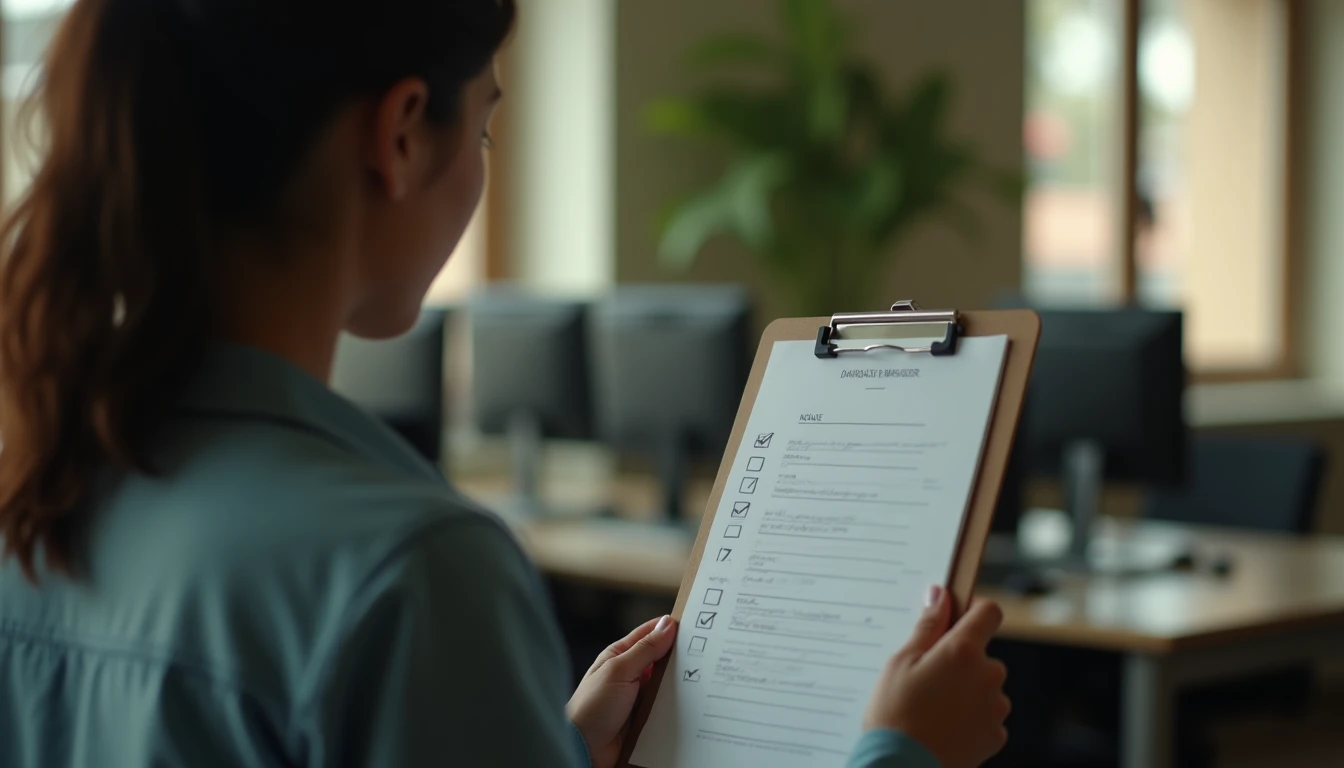
Last month, a prospective client asked us: "What do I need to prepare before the Labstory team arrives to shoot our company profile video?" It is a good question, because clients often assume their job is done once the contract is signed. In reality, your preparation as the client makes a huge difference to how smoothly the shoot goes and how good the final video turns out.
We believe good collaboration starts with a shared understanding. So here we will walk you through the prep steps you need to take before shoot day. This is not about making things harder for you; it is about keeping the process efficient and getting the best possible result.
1. Confirm and Schedule Your Key Interviewees
Your interviewees are the 'face' of your video, whether that is the company's leadership, an expert employee, or even another client whose testimonial you want to feature. Make sure they know when the shoot is and what they will be talking about.
- Who will be interviewed? Decide who your interviewees will be. Bring them in early so they feel involved.
- Pick the right time. Tell your interviewees about the shoot schedule well in advance. Make sure they have enough time and are not rushed during the interview. Being in a hurry can make their answers less than ideal.
- Give them an outline of the talking points. You do not need to hand them a full script, but give them a general picture of the topics that will come up. This helps interviewees prepare and feel more confident.
Last month, when we were shooting at an F&B startup in the Tembalang area, the main interviewee happened to be a founder with a packed schedule. We sent over the talking points three days before, and on shoot day he answered in a very structured way. That saved us about an hour, because we did not need many retakes.
2. Tidy Up and Prepare the Shooting Location
A location can be a strong visual asset, but it can also be a distraction if it is not set up well. Pay attention to the small details that are easy to miss.
- Clean up the area the camera will focus on. Clear away irrelevant items, loose cables, or unsightly stacks of paperwork. A tidy workspace reflects a professional company.
- Make sure the lighting is adequate. If you are shooting in an office, check that the room lights work properly. If there is a specific area you want to highlight, discuss it with our team. Sometimes we need to add extra lights, such as an Aputure Amaran 200x, to bring out product details or key areas.
- Watch the background. What will be visible behind the interviewee? Make sure the background supports the message you want to get across. Avoid outdated promotional posters or accidental marks on the walls.
When we shot at a café in Kota Lama, we asked the owner to rearrange the display on the wall behind the bar. As a result, the café looked cleaner on camera and the focus stayed on the atmosphere we wanted to capture.
3. Sort Out Location Permits (If Needed)
Some locations require a special permit for filming, especially public places or sites with specific regulations.
- Check the filming rules. Does the location you chose (for example a public space like Taman Tirto, or a historic building) require a permit from the site manager or the local government?
- Apply for permits well ahead of time. Permits can take a while. Make sure you have sorted them out before the shoot date so there are no delays.
- Let our team know. Tell us about any special permit conditions, such as specific operating hours or limits on where we can film.
We were once asked to shoot in a port area near Tanjung Emas Port. It turned out we needed a special permit from the port authority. Fortunately, the client had already taken care of it, so the shoot went smoothly without any red tape on the day.
4. Prepare Wardrobe or Uniforms
How your interviewees and the employees who appear on camera look matters for building a professional image.
- Use the company uniform. If your company has a uniform, make sure everyone who appears on camera wears it neatly.
- Choose clothes that are comfortable but formal. If there is no uniform, choose clothes that are modest, not too busy in pattern, and comfortable to sit or talk in on camera. Avoid colors that are too loud or patterns that can be distracting to the eye.
- Make sure clothes are clean and ironed. Small details like wrinkles or stains can show up clearly on screen.
We once shot at a manufacturing company in the Candi Industrial Estate. Every employee involved had been given a new, neat uniform. It made a very positive, organized impression.
5. Prepare Supporting Visual Materials
A good video is often enriched with extra visual material to clarify the story or show proof.
- Company logo. Prepare your company logo as a vector file (AI, EPS) or a high-resolution PNG. This matters if we need to show it on screen or use it as a watermark.
- Products or samples. If the video involves a product, prepare the items to be shown. Make sure they are clean and look appealing.
- Important documents. If there are documents, certificates, or data that need to be shown, prepare clear, easy-to-read versions.
- Brochures or other marketing materials. These can be extra visual elements that enrich the story.
When we made a company profile video for a law firm, the client arranged several award certificates and legal books neatly on the desk. It reinforced their credibility.
6. Appoint One Person in Charge (PIC) On Site
On shoot day, there will be a lot to coordinate. Appointing one person as the PIC makes communication much smoother.
- The PIC as a communication bridge. The PIC is our team's main contact on site. They understand your internal workflow and can help point us to the right people or areas.
- Give the PIC authority. Make sure the PIC can make quick decisions about operational matters on site, so we do not have to wait for approval from management who may be busy.
- The PIC understands the goal of the video. Ideally, the PIC also understands what the video is meant to achieve, so they can give relevant input.
On a project for a construction-sector client in Banyumanik, the PIC was an operations manager. He was very quick to help us coordinate with the field team and made sure all access permissions were in place.
7. Clear the Schedule for the Areas Being Used
Shooting a video needs room to move. The areas used for the shoot should be cleared of unnecessary activity.
- Minimize disruptions. If you are shooting in an office, try to keep the area from getting too crowded with other employees at work, so they do not break the concentration of the interviewees and the production team.
- Provide a rest area. If possible, give the production team and interviewees a place to take a short break between sessions.
- Coordinate with the relevant departments. If you are shooting in a production area or warehouse, make sure the departments involved have been informed and can adjust their activities.
We once shot in the meeting room of an agricultural company. We asked for the room to be kept clear for 2 hours. That let our team set up lighting (such as an Aputure Amaran 150 RGB) and cameras without people constantly walking through.
8. Watch Out for Sources of Noise
Unwanted background sound can ruin the audio quality of a recording. Identify and minimize sources of noise at the location.
- Temporarily switch off the AC or fans. The hum of an AC unit or fan can be very distracting, especially while the interviewee is speaking. We use a Sennheiser MKE600 microphone, which does a pretty good job capturing dialogue, but excessive background noise still needs to be kept down.
- Stay away from noisy production areas. If you are shooting in a factory or an area with running machines, pick the spot furthest from the noise, or shoot while the machines are off.
- Inform other employees. Ask other staff to avoid phone calls or loud conversations near the shooting area for the time being.
When we made a testimonial video at a dental clinic in Central Semarang, we asked the clinic staff to temporarily turn off the music playing in the waiting area so it would not bleed into the interview recording.
Shoot Day: A Few Final Things
Once all the prep above is done, there are a few more things to keep in mind on the day itself:
- Be On Time. Our production team will try to arrive earlier than scheduled to set up the equipment. We hope you and your interviewees can be there on time too.
- Interviewees Review Their Talking Points. Even though they already have an outline, it helps if interviewees reread the points before the interview starts. This helps them feel more prepared and confident.
- Flexibility. Sometimes unexpected things happen on location. Stay flexible and open to small adjustments when needed. Good communication between our team and the on-site PIC is what keeps everything moving.
A good production team can save a lot on location, but it cannot tidy a messy background, produce an interviewee nobody remembered to schedule, or silence an AC hum nobody anticipated. That part is on your side, and it is often exactly the part that decides whether a shoot day runs smoothly or drags on. One afternoon spent preparing the eight things above usually saves hours on the day itself.
Need a visual production team for a project in Semarang? Labstory is a production house based in Semarang. See the Labstory portfolio for examples of our work, or get to know our team and our approach.
FAQ
How important is location prep for the client?
Very. A tidy, well-arranged location makes the video look professional and keeps distractions to a minimum. Cleanliness, lighting, and the right background all contribute a lot to the final look of the video.
Do I need to prepare a script for the interviewees?
Not a full script. A general overview or the main talking points is enough. This helps interviewees prepare without feeling stiff, so their answers come out more natural and relevant.
What if there is unavoidable noise at the location?
We will do our best to minimize it with careful mic placement and audio editing techniques. Still, we strongly recommend switching off noise sources like the AC or machinery while the interviewees are being recorded, if possible. Letting us know about potential noise in advance helps us a lot with our prep.
How long does the client side of shoot prep usually take?
Prep time varies depending on how complex the video is and how available the interviewees are. That said, we recommend starting to plan and confirm the checklist above at least 1–2 weeks before the shoot so everything runs smoothly.



Leave a Reply