
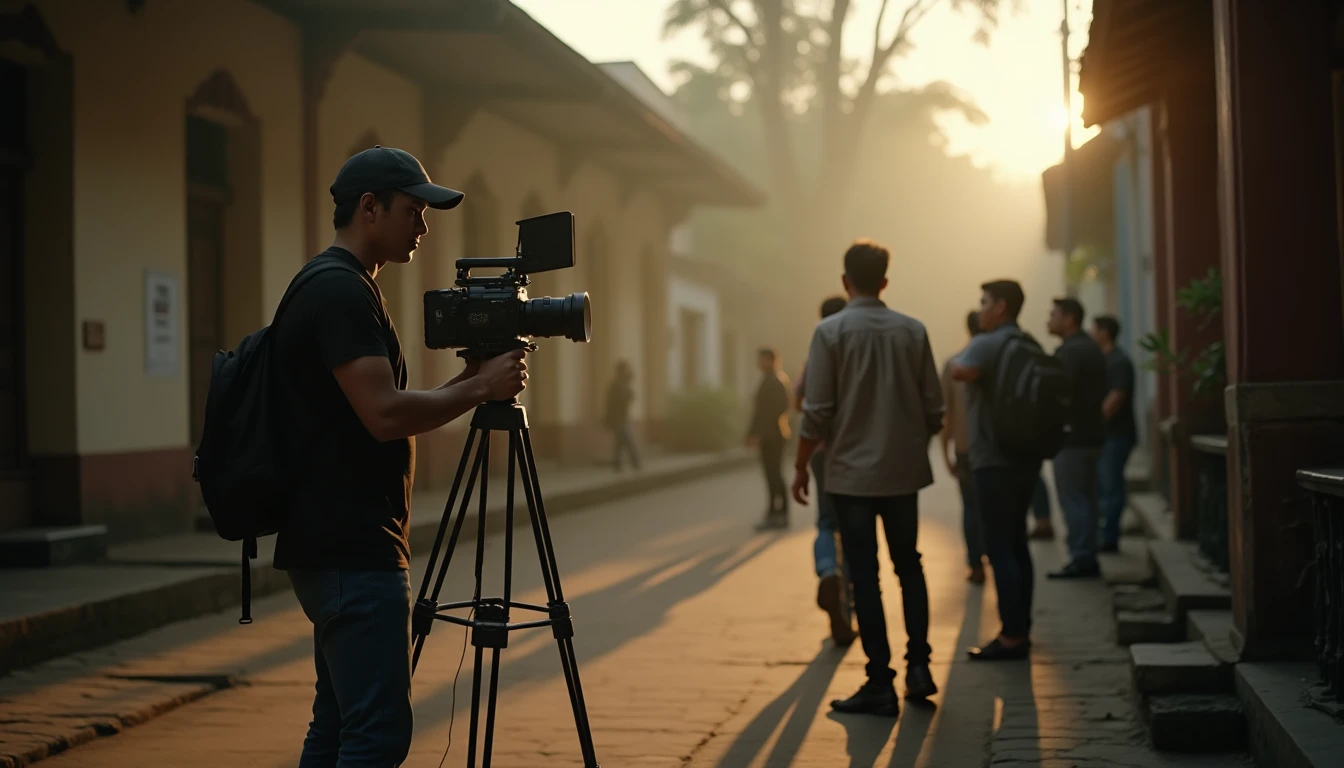
Last month, our team was asked to shoot a documentary video around Tugu Muda in Semarang. We were lucky that time, since we were only filming exteriors without disrupting traffic. But another prospective client once asked why the cost of a company profile video can vary so much. One of the factors is how complicated it is to get filming permits for public places.
Many of you might think shooting on the street or in a park is free and easy. In reality, for commercial purposes, almost every public location, especially those with historical value or under special management, requires a permit. It’s not just a formality; it’s an important step to make sure your project runs smoothly and to avoid legal trouble or being shut down halfway through.
We often get questions about filming permits in Semarang, especially with so many appealing heritage areas like Kota Lama, and busy spots like malls and town squares. Getting a permit to film in public places in Semarang does sound complicated, but it’s actually manageable once you know the steps.
Why Does a Filming Permit Matter?
Commercial shoots in public spaces, heritage areas, malls, or even public roads in Semarang generally require a permit. Why? Because these locations usually have their own regulations on what activities can take place there. The goals vary, from keeping order, safety, and public comfort to preserving cultural heritage.
Imagine shooting in Kota Lama without a permit. Local security staff could stop your shoot, tell the crew to pack up, or even confiscate your gear. The footage you’ve already shot might not be usable either, because it could be flagged as illegal. The same can happen at malls or around government offices.
Locations in Semarang That Usually Require a Permit
Some of the areas in Semarang that we’ve most often found require a special permit for filming include:
- Heritage Areas: This includes Kota Lama, Lawang Sewu, Gereja Blenduk, and other historic areas. These places are protected as cultural heritage sites, so any activity that could alter or disturb their appearance and function needs the approval of whoever manages them.
- Malls and Shopping Centers: Malls like Paragon, Ciputra, or DP Mall usually have strict rules. They need to know when you’re shooting, what it’s for, and how you’ll avoid disturbing other visitors. Often, they have a dedicated team that handles permits and coordination.
- City Parks and Green Spaces: Parks like Taman Tirto Agung or Lapangan Pancasila (Simpang Lima) may look open to anyone, but for shoots involving a big crew, extra props, or long hours, you still need to notify the relevant agency, such as the Dinas Pertamanan (the city parks department).
- Government Office Areas: If you plan to shoot in front of government buildings, agency offices, or military areas, a permit from that institution is absolutely required. The process can be more bureaucratic and take longer.
- Public Roads and Sidewalks: Even though they look public, shoots that disrupt traffic, block a road, or make heavy use of public facilities like sidewalks also need a permit from the Dinas Perhubungan (the transportation department) or the local police.
How to Get a Permit to Film in Public Places in Semarang
The permit process may differ depending on the specific location. Still, there are a few general steps you can follow:
-
Identify Who Manages the Location: The first step is to find out who’s responsible for the location you want to film at. Is it the mall management, the Balai Pelestarian Cagar Budaya (the government cultural heritage preservation office), the Dinas Pariwisata (the tourism department), the Dinas Pertamanan, or another local government agency? You can start by looking up their contacts on the official Pemkot Semarang (Semarang City Government) website or by asking staff on site.
-
Apply Well in Advance: Don’t wait until the day before to sort out your permit. Ideally, submit your application at least 1–2 weeks before the shoot date. For more complex or sensitive locations (heritage areas, for example), it could even be a month ahead. This gives the management time to process your request and grant approval.
-
Prepare a Complete Application: Your application letter should be clear and informative. Include crucial details such as:
- Project Name: The title of the video or film.
- Purpose of the Shoot: Whether it’s for a company profile, an ad, a short film, a documentary, or something else.
- Shoot Date and Times: Give the exact date and the estimated start and finish times.
- Crew Size: The estimated number of people on the production team.
- Equipment List: List the main gear you’ll be using, including lighting, tripods, cameras, and whether you’ll be flying a drone.
- Production Scale: Whether the shoot will involve closing a road, using large props, or activities that could disturb the public.
- Contact Person: The name and phone number of the person to contact on your production side.
-
Be Prepared for Possible Fees: Some locations may charge a rental fee or a levy for using their facilities. These fees vary depending on each management’s policy. Ask about this in detail when you submit your application.
-
Coordinate on the Day: Make sure someone from your team is ready to coordinate with on-site staff or the location’s management on the shoot day. Bring the approved permit letter as proof.
The Risks of Taking Filming Permits Lightly
We’ve seen firsthand how a shoot got shut down partway through because the crew didn’t have the proper permits. That kind of experience is very costly, not just in time and effort but also in potential financial losses if the footage can’t be used. Here are a few risks to watch out for:
- Getting Stopped by Officials: This is the most common risk. Security staff, the police, or the location’s staff can tell you to stop filming at any time.
- Footage You Can’t Use: If the shoot is stopped because of a permit violation, there’s a chance the footage you’ve already shot can’t be used for commercial purposes.
- Fines or Penalties: Depending on how serious the violation is, you could face fines or other penalties under the applicable regulations.
- A Bad Relationship with the Location’s Management: Breaking the rules can get you blacklisted, making it hard to get a permit for the same location in the future.
Getting a permit does add one more piece of admin before the shoot: identify the management, apply well ahead, prepare the crew and gear details. But compare that with the opposite risk: your crew gets sent home mid-take, and footage you worked hard to record can’t be used. One letter sorted out two weeks ahead is almost always cheaper than one wasted shooting day.
Need a visual production team for a project in Semarang? Labstory is a production house based in Semarang. Browse the Labstory portfolio for examples of our work, or get to know our team and approach.
FAQ
Does every shoot in a public space in Semarang need a permit?
Not every one, but for commercial shoots that involve a big crew or a lot of gear, or that could disrupt public order, a permit is strongly recommended. Locations like heritage areas, malls, and government office areas almost certainly require one.
How long does it take to get a permit to film in public places in Semarang?
Ideally, submit your application 1–2 weeks before the shoot. For more complex or sensitive locations, like heritage areas, allow up to a month in advance.
What do I need to prepare when applying for a filming permit?
Prepare the project details: name, purpose of the shoot, date & times, crew size, equipment list (including a drone, if any), and a contact person. Make sure the application letter is complete and clear.
Is there a fee for a permit to film in public places in Semarang?
It depends on the location. Some places may charge a rental fee or a levy. Ask the location’s management for the details when you submit your application.
What are the risks of filming without a permit in public places in Semarang?
The main risks are having your shoot stopped by officials, footage you can’t use, fines, or even getting blacklisted from that location in the future.


Leave a Reply